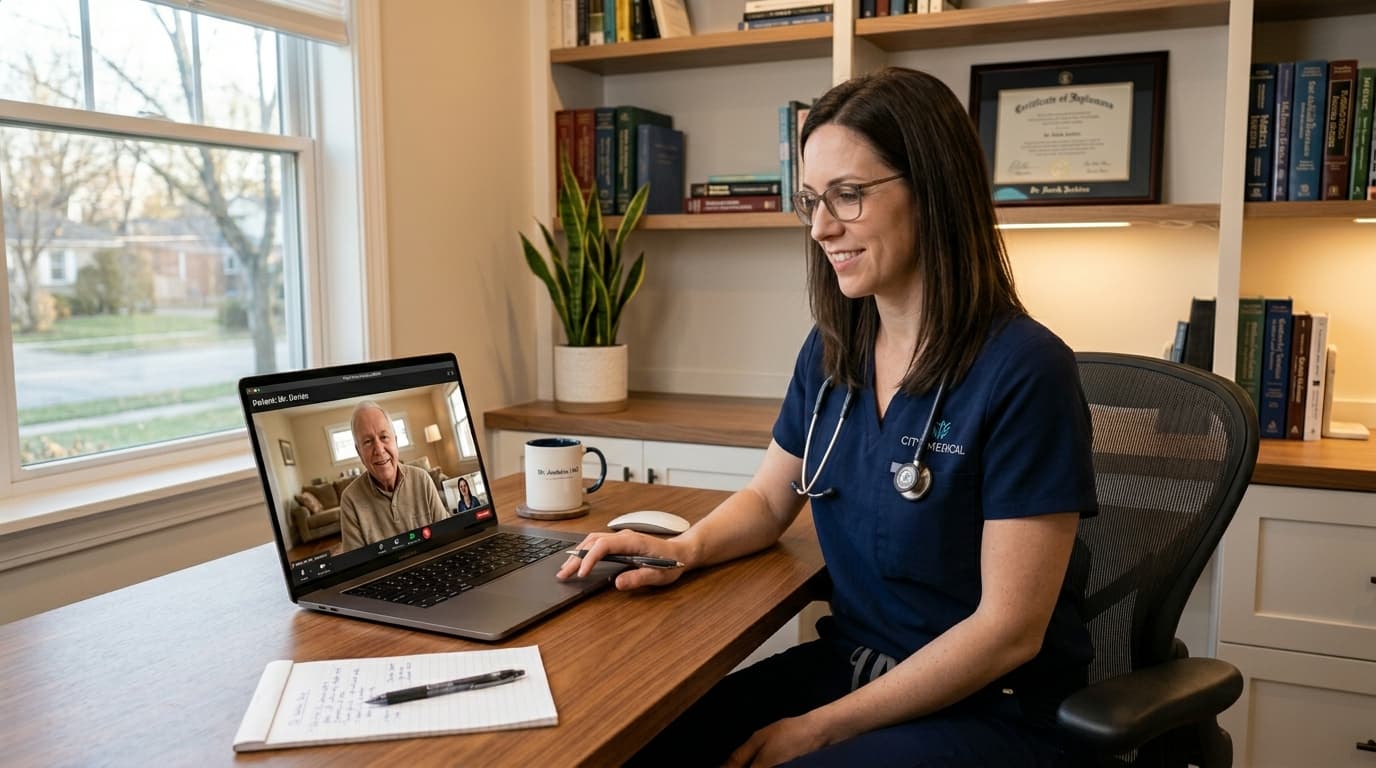
One of the questions I hear most often from new patients is some version of: "Can a doctor really evaluate me properly over a video call?" It is a fair question, and I understand the skepticism. Many people picture neurology as necessarily hands-on — reflexes, balance tests, that little hammer. And while there are certainly circumstances that require an in-person visit, the truth is that a very large portion of neurological assessment happens through conversation, observation, and structured cognitive testing — all of which translate remarkably well to video.
A 2022 systematic review published in JAMA Neurology found that telehealth-delivered cognitive assessments showed strong concordance with in-person evaluations for conditions including mild cognitive impairment and early-stage Alzheimer's disease. The American Academy of Neurology has formally endorsed telehealth as an appropriate modality for many neurological conditions, particularly cognitive disorders. So yes — a thorough, meaningful evaluation is absolutely possible remotely, especially for memory and cognitive concerns.
Here is exactly what you can expect when you book a visit through NimbleNeuro.
Before the Visit: How to Prepare
A little preparation makes a real difference. Here is what I recommend gathering before your appointment:
A complete medication list. This means every prescription, over-the-counter medication, vitamin, and supplement — with doses if you have them. Many common medications, including certain antihistamines, sleep aids, bladder medications, and even blood pressure drugs, can affect cognition. Ruling out medication-related cognitive effects is one of the first things I do, and I cannot do it without a full picture.
A symptom log or timeline. When did you (or the person you care for) first notice something was different? What does it look like in daily life? Are there good days and bad days? Has it progressed, stayed the same, or come on suddenly? Write it down. I will ask about all of this, and having notes in front of you during the call takes the pressure off your memory in the moment.
Relevant medical records, if available. Prior brain imaging (MRI or CT reports), previous cognitive testing results, or records from other specialists are all helpful — but not required. You can upload documents through the secure patient portal before the appointment.
A quiet, well-lit space. Find a private room with minimal background noise. Good lighting — natural light facing you, if possible — helps me observe facial expressions and eye movements, which are clinically relevant. A tablet or laptop is preferable to a smartphone because the larger screen makes the cognitive testing portion of the visit easier to complete.
A trusted person, if helpful. Many of my patients bring a spouse, adult child, or close friend to the visit. This is genuinely useful — a second observer can often provide details the patient has not noticed or remembered. You are always welcome to have someone with you.
What Happens During the Visit
Once we connect, the appointment typically unfolds across three areas:
History and conversation. We start by talking. I want to understand your specific concerns, your medical and family history, your lifestyle, your sleep, and how symptoms are affecting your daily functioning. This part of the visit is not a formality — it is often where the most diagnostically important information emerges. The pattern, timing, and character of symptoms frequently points toward a specific neurological picture long before any test result arrives.
Cognitive screening. Depending on your concerns, I will administer one or more validated cognitive assessments remotely. The Montreal Cognitive Assessment (MoCA) is a 30-point screening tool that evaluates memory, attention, language, executive function, and visuospatial ability. It has been validated for remote administration and takes approximately 10 minutes. Other tools — including the Mini-Mental State Examination (MMSE), the Trail Making Test, or portions of the Alzheimer's Disease Assessment Scale-Cognitive (ADAS-Cog) — may also be used depending on the clinical picture. These tests are not pass/fail in a frightening sense; they are measurement instruments that help establish a baseline and compare to validated norms for your age and education level.
Medication review. As noted above, this is a critical piece. I review every medication you are taking and flag anything with known cognitive effects, potential interactions, or dosing concerns. This step alone sometimes reveals straightforward, addressable reasons for cognitive symptoms.
Observational assessment. Throughout our conversation, I am noting your speech patterns, word-finding, organization of thought, and — for patients where it is relevant — any abnormal movements, eye movement irregularities, or asymmetries that are visible on video. The neurological exam is never entirely replaced by a remote visit, but a skilled clinician can gather substantial information through careful observation.
What Happens After the Visit
At the close of the appointment, I will share my clinical impressions with you directly — I believe strongly in transparent, real-time communication. From there, the next steps depend on what we find:
Referrals for testing. If imaging, bloodwork, neuropsychological testing, or a sleep study is indicated, I will provide referrals you can take to local facilities. You do not need to travel for these — they can generally be completed at a lab or imaging center near you, and we will review the results together in a follow-up telehealth visit.
A care and treatment plan. Depending on findings, this may include lifestyle recommendations, medication adjustments, a specialist referral (neuropsychology, geriatric psychiatry), or the initiation of pharmacological treatment if indicated.
A written summary. You will receive a visit summary through the patient portal, including my assessment, recommendations, and any referrals generated. This is yours to share with your primary care physician or any other provider involved in your care.
A Note on What Telehealth Cannot Replace
I want to be honest with you: there are clinical situations where an in-person visit is the right call — and I will tell you clearly when that is the case. A full physical neurological examination, including gait analysis, detailed sensory testing, and some aspects of coordination assessment, requires being in the same room. If your presentation suggests a need for that level of evaluation, I will direct you to the appropriate in-person setting. Telehealth is a powerful tool; it is not the only tool.
For the majority of cognitive and memory concerns, however — and for the ongoing management of chronic neurological conditions — a telehealth visit can provide exactly the quality and depth of care that would be available in a traditional office, with significantly less friction for patients who are already dealing with challenges around transportation, fatigue, and caregiver logistics.
Your first visit starts here
See a board-certified neurologist from home
NimbleNeuro appointments are conducted via secure Google Meet, fully HIPAA-compliant, and designed to be as thorough and personal as any in-office visit. Appointments available within days, not months.
Book a Telehealth Visit with Dr. Dee